For most people, the ability to smile, eat, or speak is something they rarely think about. Yet for Cameron Underwood, these everyday actions once seemed impossible. His life changed dramatically after he underwent one of the most advanced facial transplant surgeries ever performed—an operation that not only restored his appearance but also gave him back the basic functions many take for granted.
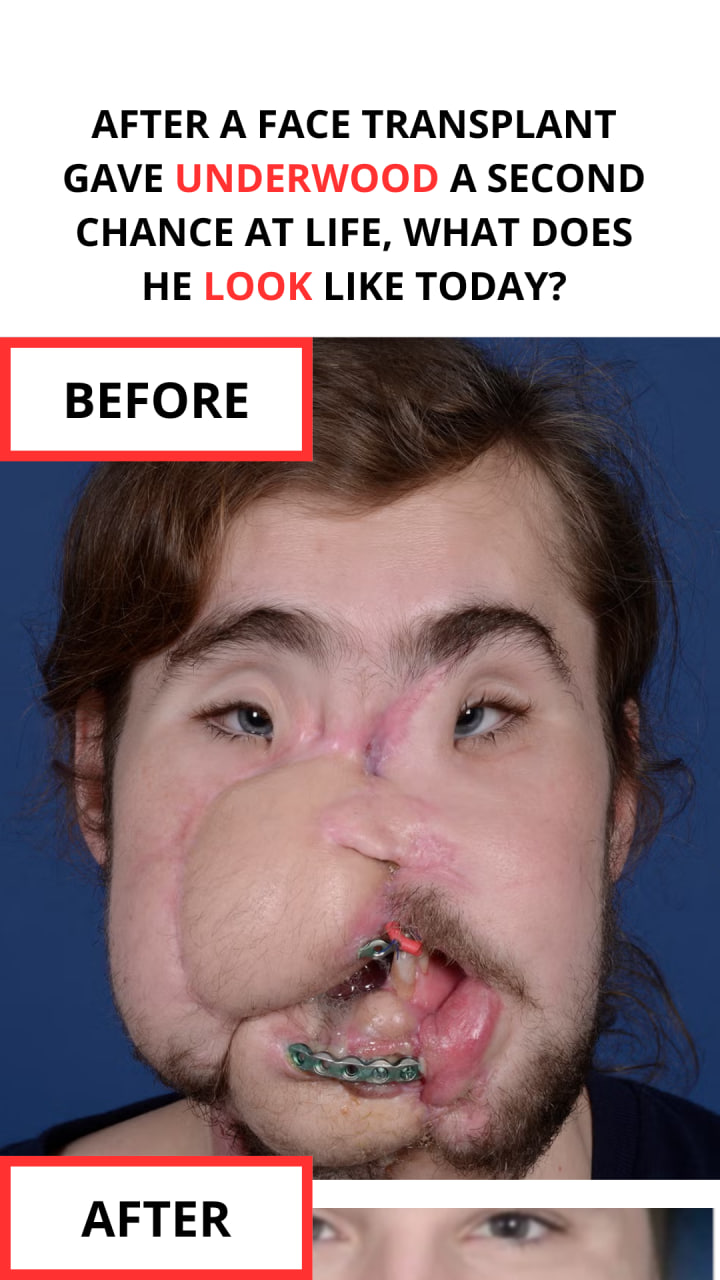
Cameron’s journey began with a devastating accident that left him with severe facial injuries. The damage was so extensive that much of his face had to be reconstructed. Everyday tasks such as eating food, speaking clearly, or even smiling became incredibly difficult. The physical challenges were accompanied by emotional struggles, as the injuries drastically affected his confidence and independence. At a time when his future seemed uncertain, a team of highly skilled surgeons offered him a chance at something extraordinary: a full facial transplant.
The groundbreaking procedure took place at NYU Langone Health in New York. There, a specialized surgical team performed a complex operation that required many hours of meticulous work. Using donor tissue, the doctors reconstructed nearly Cameron’s entire face. The transplant included a new jaw, teeth, lips, nose, and even parts of his cheeks and eyelids. Each element had to be carefully connected—muscles, nerves, blood vessels, and bone—so that the new face would function naturally.
Facial transplant surgery is among the most challenging procedures in modern medicine. Unlike many other transplants, it must restore not only structure but also movement and sensation. Surgeons must ensure that nerves eventually reconnect so that the patient can blink, chew, and express emotions again. For Cameron, the success of this surgery represented the incredible progress of medical science and the dedication of the medical professionals who performed it.
Recovery after such a major operation requires patience and determination. Cameron spent months undergoing rehabilitation, allowing his body to adapt to the transplanted tissue. Slowly but surely, he began regaining abilities that once seemed lost forever. Eating became easier. Speech improved. Most importantly, he could once again express emotions through his facial expressions.
Today, Cameron describes the transplant as a life-changing experience. The surgery not only transformed his physical appearance but also restored his sense of self. With his renewed confidence, he has been able to return to a more independent life and reconnect with the world around him. Simple things—laughing with friends, enjoying a meal, or looking in the mirror—now carry a deeper meaning.
His story also highlights the importance of organ and tissue donation. Without a donor and their family’s generosity, this life-saving procedure would never have been possible. Cameron has often spoken publicly about his gratitude and hopes that his experience encourages others to consider becoming donors.
The story of Cameron Underwood is more than just a medical case—it is a powerful reminder of human resilience and the possibilities created by modern medicine. What once seemed unimaginable has become reality, proving that with innovation, compassion, and courage, even the most severe challenges can be overcome.